Our Innovation.
A Dynamic, Partial Identity Architecture
A new identity security layer that stops reuse, replay, and large-scale identity compromise
Revolutionising Identity Protection
Identity fraud costs individuals, businesses, and governments over one trillion dollars globally each year, impacting nearly every form of digital and physical identity in use today.
The root cause is simple: static identifiers — once exposed — can be reused, replayed, and exploited at scale.
Our approach introduces a dynamic, partial identity architecture that reduces exposure by ensuring only limited, time-bound identity fragments are ever presented, while full identities are reconstructed only by authorised systems.
By design, this architecture limits the usefulness of stolen identity data and reduces the blast radius of breaches across online services, payment systems, and government-issued credentials.
The same principle applies across a wide range of identity contexts — including government credentials, financial instruments, enterprise access, and digital accounts — without requiring users to manage complex new behaviours.
Rather than displaying or transmitting complete identifiers, systems can rely on partial, renewable identity values, significantly reducing the risk associated with interception, reuse, or compromise.
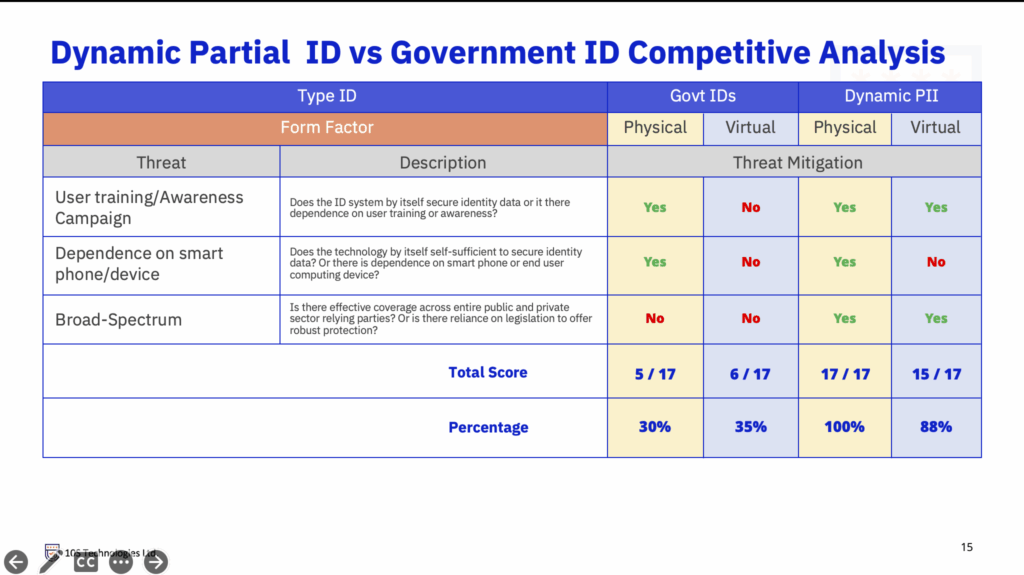
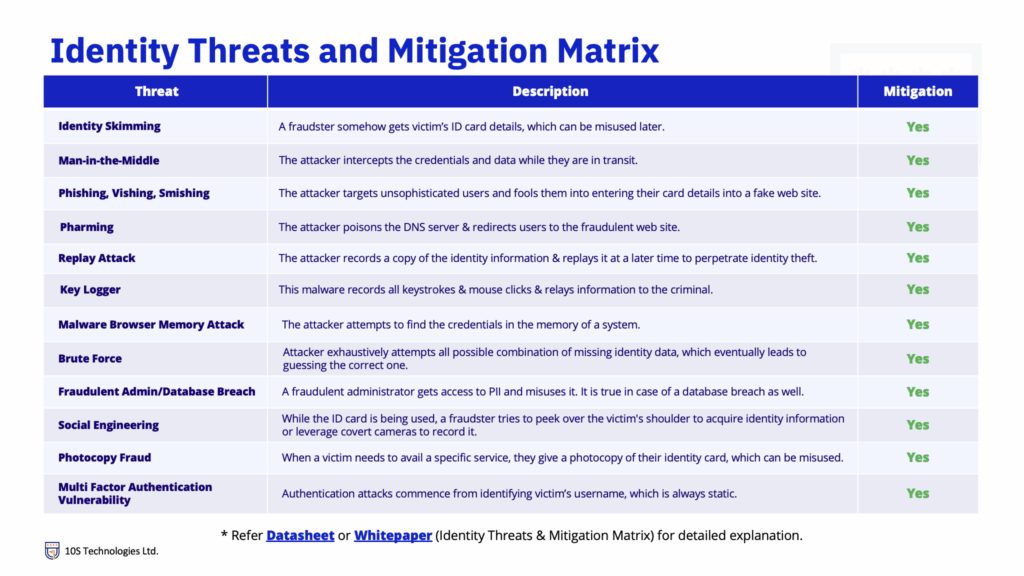
Why Static Identity Fails — and Dynamic Partial Identity Stops Identity Abuse by Design (Comparative Security Analysis)